

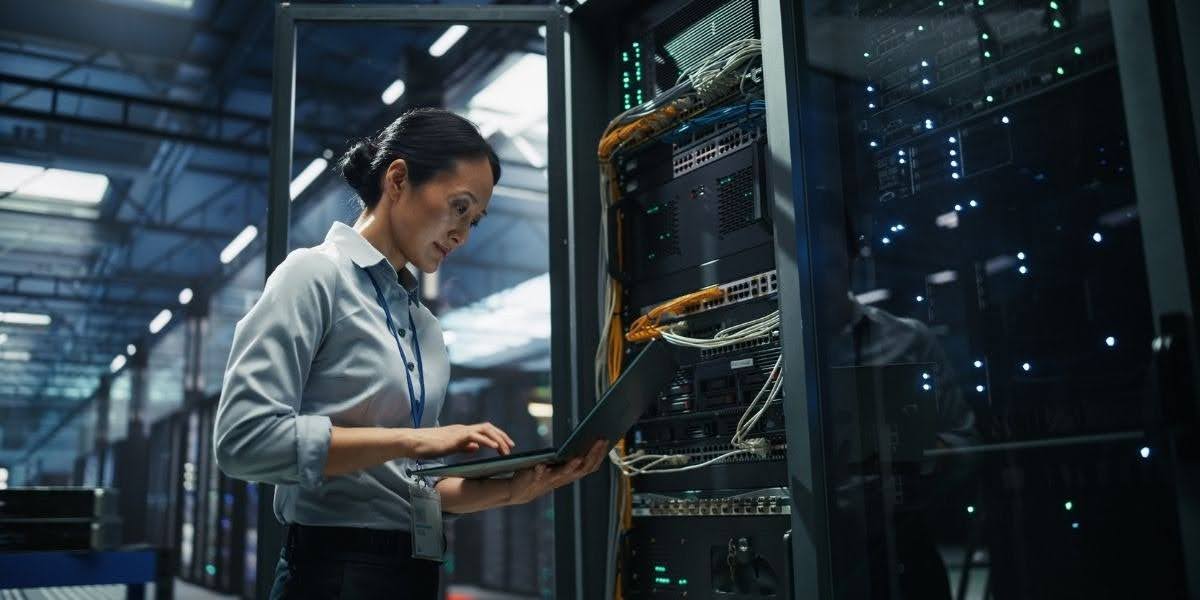
Artificial intelligence is changing how businesses manage technology, from monitoring networks to predicting equipment failures. As companies grow, AI in IT infrastructure is becoming a useful tool for improving performance, reducing downtime, and managing IT systems across multiple locations.
For businesses operating several offices, retail stores, or facilities, keeping technology running consistently can be challenging. Different locations often have different equipment, network conditions, and maintenance needs.
AI helps IT teams identify problems earlier, analyze performance data, and make better decisions about infrastructure maintenance. However, businesses still need reliable networks, updated hardware, and on-site technical support to put those insights into action.
What Is AI in IT Infrastructure?
AI in IT infrastructure refers to using artificial intelligence and machine learning to monitor, analyze, and manage business technology systems.
These systems include networks, servers, storage, wireless equipment, and connected devices. AI analyzes performance data to identify patterns, detect unusual activity, and recommend improvements.
Traditional IT monitoring typically relies on predefined alerts. For example, a system may notify technicians when a router goes offline.
AI-powered monitoring can go further by identifying unusual traffic patterns, repeated connection problems, or declining equipment performance before a complete failure occurs.
This gives IT teams more information to investigate problems and plan maintenance.
AI doesn't replace IT professionals. It supports their work by making infrastructure data easier to analyze and act upon.
How Businesses Use AI for IT Infrastructure
Businesses can use AI for IT infrastructure in several practical ways, especially when managing technology across multiple locations.
1. Predictive Maintenance
Predictive maintenance uses equipment data to identify possible failures before they happen.
AI can analyze error logs, device temperatures, and historical performance to recognize warning signs.
For example, if several network switches experience repeated connection errors before failing, AI may identify similar patterns in other devices.
IT teams can then schedule inspections or replacements before those problems interrupt operations.
This works best when paired with reliable IT maintenance services that support physical equipment inspections and repairs.
2. Network Performance Monitoring
AI-powered monitoring tools analyze network traffic, connection quality, and device performance.
These tools can help identify:
- Unusual network traffic or bandwidth usage.
- Repeated wireless connection failures.
- Network equipment experiencing performance problems.
- Locations with recurring connectivity issues.
For example, a retail chain may experience intermittent POS connectivity problems across several stores. AI-supported monitoring can help identify patterns, allowing technicians to investigate the underlying cause.
Businesses can then use network maintenance services to complete necessary testing, equipment replacement, or cabling repairs.
3. Faster IT Troubleshooting
AI can help IT teams review system logs, group related alerts, and identify possible causes of technology problems.
Instead of manually reviewing multiple alerts from a network outage, technicians can use AI-supported analysis to narrow their investigation.
However, physical problems such as damaged cables, failed power supplies, or faulty network equipment still require hands-on testing.
AI helps identify where the problem may be, while technicians confirm the cause and complete repairs.
4. Better Infrastructure Planning
AI can analyze historical performance and usage trends to help businesses plan future technology upgrades.
For example, a growing company may use AI-supported analytics to determine which locations are approaching network capacity limits.
This information helps IT teams plan hardware replacements, improve wireless coverage, and prepare for additional connected devices.
Why AI in IT Infrastructure Matters for Growing Businesses
Managing technology becomes more difficult as businesses add locations, employees, and connected equipment.
AI can help IT departments monitor larger environments without relying entirely on manual inspections and individual reports.
Improved Visibility Across Locations
Businesses with multiple locations often struggle to maintain consistent information about their IT equipment.
AI-supported monitoring can identify locations with recurring network problems or unusual equipment performance.
This gives IT leaders a clearer picture of where technical attention is needed.
Reduced Downtime
AI can identify warning signs that traditional monitoring systems might miss.
When IT teams receive useful alerts early, they may be able to schedule maintenance before equipment fails.
Although AI cannot prevent every outage, it can support a more proactive maintenance strategy.
Better Hardware Decisions
AI can help businesses identify aging or unreliable equipment through performance trends.
Instead of replacing hardware based only on age, IT teams can also consider maintenance history and actual performance.
As explained in Tech Service Today's AI adoption and hardware standardization resources, consistent equipment standards also make infrastructure easier to maintain across multiple locations.
What Infrastructure Is Needed to Support AI?
Businesses need reliable technology foundations before introducing AI-powered tools.
Even advanced AI platforms can provide limited value when equipment is outdated or monitoring information is incomplete.
Reliable Networks and Connectivity
AI monitoring systems often depend on continuous communication between connected devices and central platforms.
Slow connections, unstable Wi-Fi, and recurring network interruptions can affect data collection.
Before deploying AI tools, businesses should review bandwidth, network equipment, wireless coverage, and connectivity.
For additional guidance, see Can Your Current Network Handle AI-Powered Business Tools?.
Updated Hardware
Not every AI application requires new hardware. However, older equipment may lack compatible monitoring features or sufficient performance.
IT teams should review routers, switches, access points, and connected devices before introducing additional AI-supported systems.
Businesses can also explore how AI is changing infrastructure requirements to better understand which technology upgrades may be necessary.
Accurate Equipment Documentation
AI depends on reliable information.
Incomplete asset inventories, outdated network diagrams, and inconsistent equipment records can reduce the accuracy of its recommendations.
Businesses should maintain current hardware inventories, maintenance histories, and equipment configurations.
Physical site surveys can help verify information that cannot be confirmed remotely.
Challenges of Using AI in IT Infrastructure
Although AI provides operational benefits, businesses should understand its limitations.
Data accuracy: AI recommendations depend on the quality of monitoring information. Missing or incorrect records can lead to misleading results.
Security: AI platforms may process sensitive system information. Businesses should review vendor permissions, data handling practices, and access controls. The NIST AI Risk Management Framework provides useful guidance for evaluating AI-related risks.
Integration: AI alerts must connect to existing ticketing systems, escalation procedures, and maintenance workflows.
Human oversight: AI can recommend actions, but IT professionals must verify findings and approve important infrastructure changes.
The most effective approach combines AI-supported analysis with established IT procedures and qualified technical personnel.
How to Prepare Your IT Infrastructure for AI
Businesses should introduce AI gradually rather than attempting to change every system at once.
A practical implementation process includes:
- Assess existing systems: Review networks, equipment, monitoring tools, and asset records.
- Identify operational priorities: Focus on specific issues such as recurring outages or maintenance planning.
- Test AI tools: Run a pilot across a limited group of locations.
- Establish response procedures: Define how alerts become service tickets, inspections, or repairs.
- Expand based on results: Review performance before introducing the system across additional locations.
For multi-site organizations, physical infrastructure preparation may require coordinated equipment installations, cabling work, and hardware upgrades.
Why On-Site IT Support Still Matters
AI can detect potential technology problems, but it cannot physically repair equipment.
A monitoring platform may identify a failing router, damaged connection, or wireless performance issue. However, resolving the problem may require a technician to inspect equipment, replace hardware, or test cabling.
This is especially important for businesses managing hundreds of locations.
Tech Service Today supports internal IT teams through nationwide on-site technical services, including site surveys, equipment installations, hardware replacements, troubleshooting, and emergency repairs.
With a network of more than 20,000 field technicians, Tech Service Today helps businesses coordinate physical infrastructure work across North America.
This support allows internal IT departments to act on monitoring findings without managing separate local service providers at every location.
Frequently Asked Questions About AI in IT Infrastructure
What are the main benefits of AI in IT infrastructure?
AI in IT infrastructure helps businesses monitor network performance, identify possible equipment failures, analyze system problems, and plan hardware upgrades. It can improve visibility and help IT teams respond more effectively to infrastructure issues.
Can AI in IT infrastructure reduce downtime?
AI can help reduce downtime by identifying unusual performance patterns before equipment fails. However, early warnings must be followed by appropriate maintenance or repairs. AI cannot prevent every hardware failure or network outage.
Does AI for IT infrastructure require new hardware?
Not always. Many AI platforms work with existing equipment. However, businesses may need upgrades if older devices lack monitoring features, compatible firmware, or sufficient performance.
Can AI replace IT technicians?
No. AI supports monitoring and analysis, but technicians are still needed for physical inspections, hardware installations, cabling repairs, and equipment replacements.
How should businesses prepare for AI?
Start by evaluating network reliability, equipment compatibility, monitoring coverage, and asset documentation. Test AI tools at a few locations before expanding, and establish clear procedures for handling alerts and maintenance requests.
Prepare Your Business for AI in IT Infrastructure
AI in IT infrastructure is helping growing businesses improve network monitoring, maintenance planning, and technology management. By identifying performance issues earlier and analyzing equipment data, AI gives IT teams useful information for managing complex environments.
However, reliable infrastructure remains the foundation of successful AI adoption. Businesses still need dependable networks, compatible hardware, accurate documentation, and physical technical support.
Tech Service Today helps multi-site organizations prepare and maintain their technology environments through nationwide on-site field services. From network upgrades and equipment installations to troubleshooting and repairs, its technicians support the physical work behind modern infrastructure operations.
If your business is preparing its technology for AI-powered tools, explore Tech Service Today's AI infrastructure support services to discuss the on-site infrastructure work needed across your locations.